


Jump to main content
POWERING INNOVATION ACROSS CLOUD, EDGE, AND EMBEDDED SYSTEMS

Customers

From secure virtualization to legacy software support and test automation — Cyberus helps industry leaders build reliable, modern infrastructure.

Click on the title below to read the respective case study.

SAP

Supporting SAP in the ApeiroRA Project

Cyberus is proud to support SAP as a contractor in their work on the ApeiroRA project. Previously known as ORA until September 2024, ApeiroRA is a European initiative to build a sovereign, open-source cloud infrastructure for the next generation of trusted cloud platforms.

Working with the SAP CobaltCore Team

Our direct collaboration is with the SAP CobaltCore team, which leads the development of an opinionated, Kubernetes-enabled OpenStack distribution. CobaltCore is fully embedded within ApeiroRA and plays a key role in shaping the project’s architecture and direction.

Delivering the Virtualization Stack

Cyberus provides the virtualization layer for the CobaltCore distribution, based on our open-source Cyberus Hypervisor. Designed for high security, auditability, and performance, our hypervisor forms a foundational component of the SAP-led platform.

Integration with openstack-nixWe also contribute to the integration of OpenStack with Nix, making CobaltCore more reproducible, maintainable, and modular. This work helps SAP realize its goal of a declarative and infrastructure-as-code approach within the project.

Live Migration and KVM Expertise

In addition, Cyberus supports live migration analysis of QEMU/KVM-based virtual machines. This ensures robust, secure, and efficient VM mobility across nodes—an essential feature for large-scale production cloud deployments.

Enabling Trusted European Cloud Infrastructure

Through this partnership, Cyberus helps SAP deliver on the vision of a sovereign, secure, and open cloud infrastructure. Our technical contributions strengthen the virtualization and orchestration layers of the platform and showcase how tightly integrated, open-source components can drive trusted European innovation.
secunet

Accelerating Healthcare Innovation with Cyberus Hypervisor

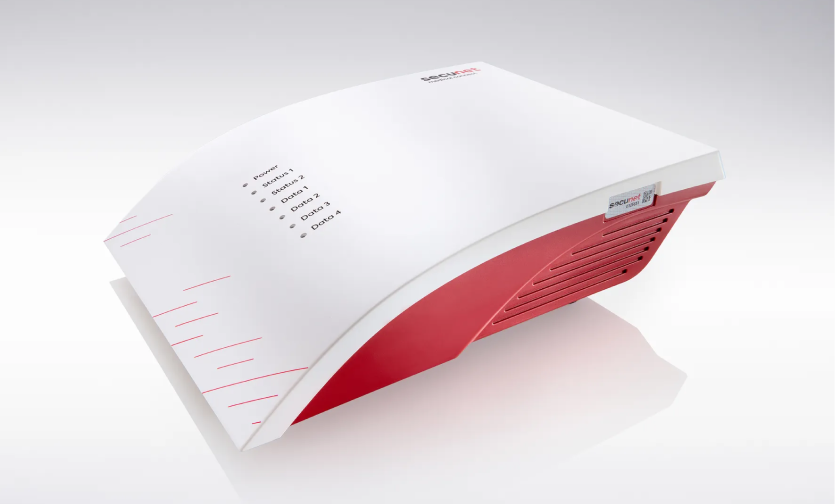
secunet, Germany’s leading provider of high-assurance IT security solutions, partnered with Cyberus to develop their next-generation medical connect Edge Gateway Platform. By integrating the Cyberus Hypervisor as the secure virtualization layer, secunet delivered a product with a smaller footprint, stronger security, and a faster time-to-market.

Meeting Healthcare Market Demands with Confidence

To meet the high security and compliance standards of the healthcare sector, secunet required:A secure, auditable virtualization baseHigh performance and reliabilityTechnical expertise and long-term supportCyberus delivered on all three, allowing the secunet product team to focus on delivering customer value without worrying about bugs, integration complexity, or security gaps.

The Challenge: Security Without Complexity

During the early product phase, secunet evaluated several alternatives:QEMU-based stacks proved too complex and difficult to secureMicrokernel hypervisors lacked flexibility, tooling, and hardware supportThey needed a partner who could provide both a secure base and fast, pragmatic engineering support.

Why secunet Chose Cyberus Hypervisor

Expert support and customization: Cyberus provided on-demand feature development and day-to-day engineering guidance.

Faster time-to-market: With Cyberus’ help, secunet shipped medical connect 20% faster.

Shared platform standard: The Cyberus Hypervisor is part of secunet’s internal Software Factory as a standard hypervisor component. This ensured a stable, reproducible base across teams and projects.

Impact: Secure and Scalable Product Delivery

By choosing Cyberus Hypervisor, secunet was able to:

Deliver faster: Launching on time without needing to build internal virtualization know-how.

Save resources: Avoided months of engineering effort by relying on Cyberus’ secure, proven base.

Remain adaptable: Supported diverse edge and cloud use cases through flexible hardware and application abstraction.

Conclusion: Trusted Infrastructure for Mission-Critical Devices

Cyberus enables secunet to confidently deliver secure, high-performance solutions to the healthcare market. With the Cyberus Hypervisor as their foundation, secunet now builds on a platform that’s reliable, flexible, and future-proof.

veridos

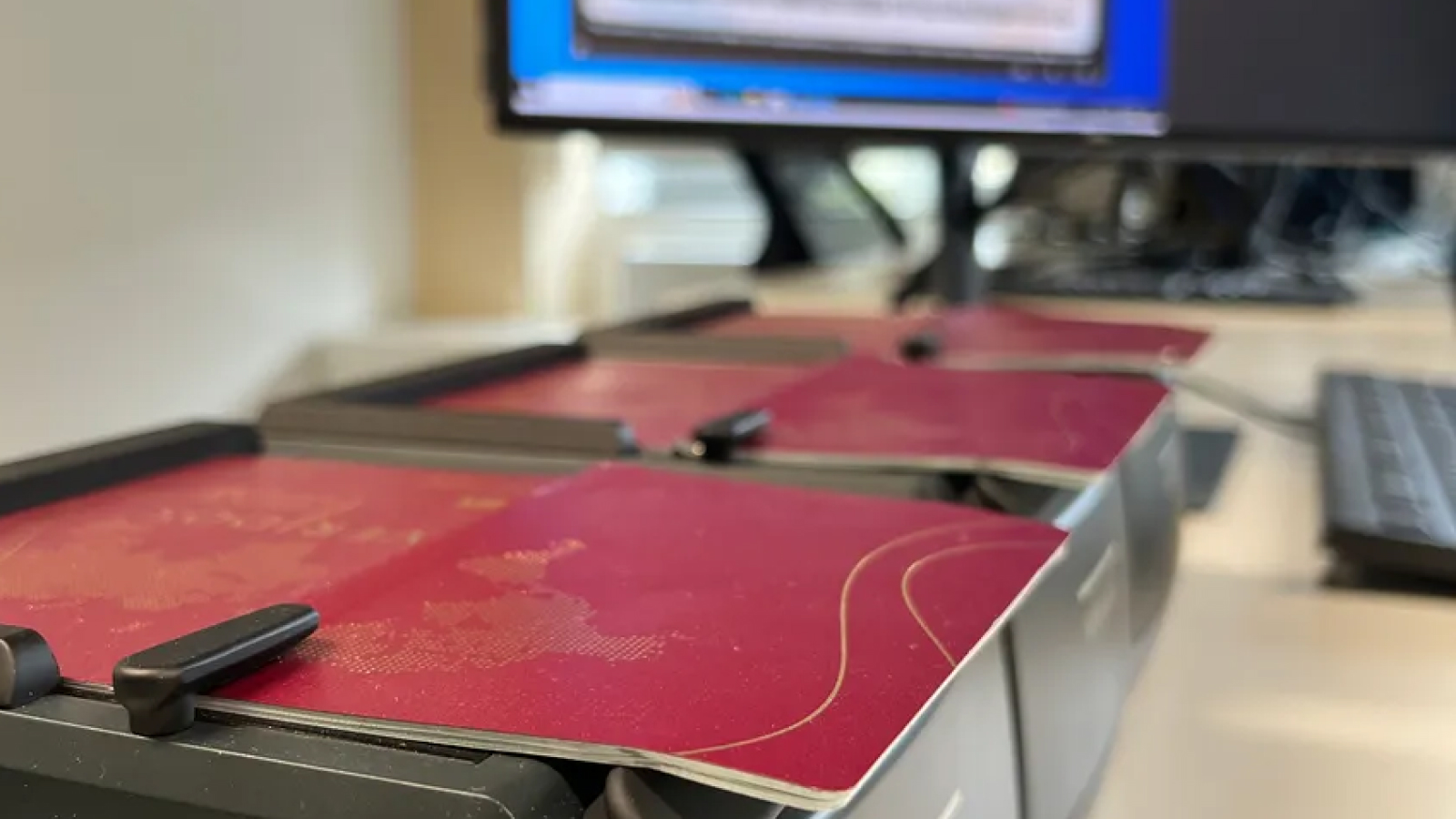
Automating Hardware-Dependent Tests for Passport Readers

Veridos, a global leader in identity solutions, partnered with Cyberus to transform their manual testing process into a fully automated system—saving time, reducing costs, and enabling secure global collaboration.

The Challenge: Manual Testing Across Global Development Centers

Veridos faced a major challenge: manual testing of identity document scanners was slowing down development. Due to strict regional regulations, test documents couldn’t be shared or moved between countries. As a result, each software change required local engineers to manually trigger tests, creating delays and inconsistencies.

The Goal: Shift-Left and Automate

The objective was clear—automate hardware-dependent tests to support Shift-Left Testing, reduce feedback loops, and integrate seamlessly with CI/CD pipelines. Veridos needed a solution that could:

  • Run tests remotely and globally
  • Ensure reproducibility and reliability
  • Be controlled centrally and integrated easily into existing workflows

The Solution: A Scalable and Secure Test Automation System

Cyberus delivered a working automation prototype in less than 20 days. The solution includes:

  • A REST API and Web Interface for remote test scheduling and device management
  • Full CI/CD integration for automated and repeatable testing
  • Virtual machine orchestration for isolated and clean test environments
  • USB passthrough and SSH control for test execution and result collection
  • Remote power cycling of scanners to recover from failed states

Key Benefits for Veridos

By leveraging the Cyberus test automation system, Veridos achieved:

  • Cost savings: Fewer physical machines needed—multiple VMs now run on a single host
  • Time efficiency: Testing time reduced from hours to minutes
  • Global accessibility: Engineers can test remotely, even across borders
  • Higher reliability: Reproducible test results, tightly integrated with CI/CD
  • Parallelization: Multiple scanners and documents tested simultaneously

Inside the System: Smart Automation from Start to Finish

Each test is run in a clean VM environment. The scanner is passed into the VM using USB passthrough, the test software is uploaded via the REST API, executed via SSH, and the results are returned to the user. After each test, scanners are automatically power-cycled to prevent failure states from lingering.This level of automation ensures that even geographically isolated teams can test region-specific identity documents without manual steps or compliance concerns.

Outcome and Future Outlook

Today, Veridos runs automated hardware tests across multiple international sites, fully integrated into their development cycle. Every software change triggers a complete round of tests—ensuring quality, traceability, and faster delivery.This robust infrastructure is already proving its value and can be scaled up as Veridos expands its global footprint.